
Rob and I have been planning this trip for some time, we’ve read reviews expressing the opinion that it is one of the most beautiful natural places to visit in China, importantly, it is also within reach of our home town by bullet train.
We hope to visit locations in the surrounding area, so we have investigated some tour guides and found an excellent service from ‘Wendy Wei tours’ an English-speaking Chinese company based in the region. We have booked two days of tours, one in Guilin and one in Yangshou travelling between the two towns by a 4 hour boat trip down the Li River that we will arrange ourselves in Guilin.
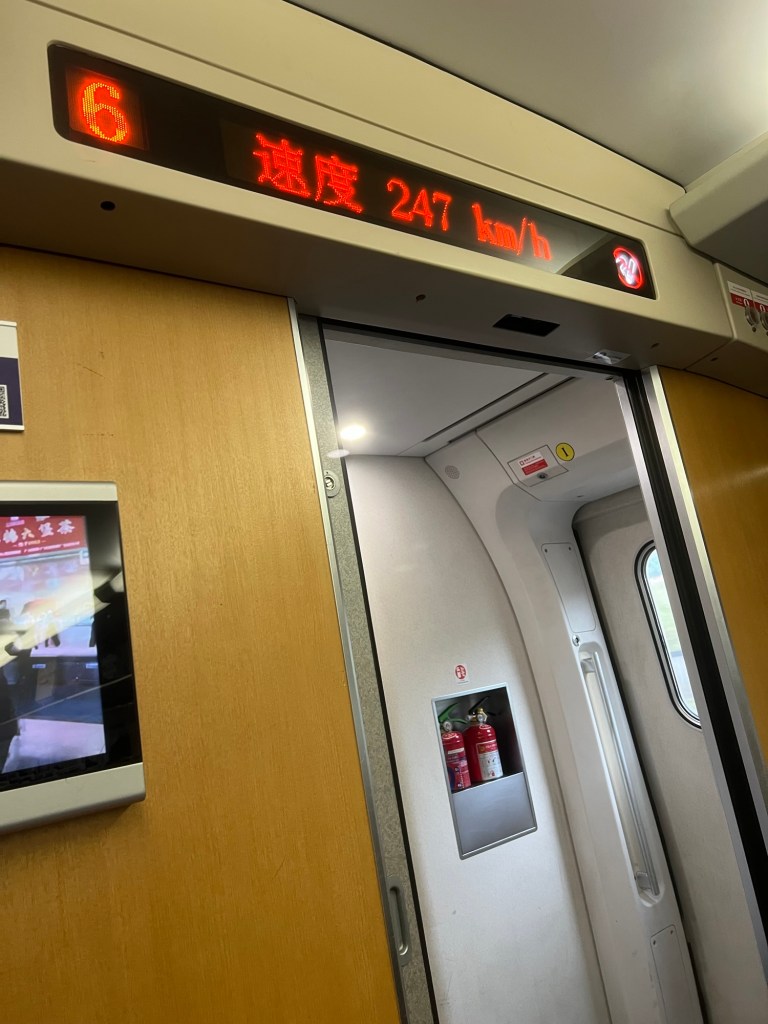
Next consideration is a bullet train to Guilin and home again! I download a Chinese Train App called ‘Railway12306’ – you cannot book until precisely 2 weeks before your trip and on the dot of 5.30 pm when booking opens we buy two tickets to Guilin on the bullet train. Guilin is 700 km away from us and would take 7 hours driving, but will be only 3 ½ hours on the train travelling between 250 – 280 km/h. A slight awkwardness is that…you have to wait precisely 2 weeks and so many hours to purchase the return journey! And…you do not receive either an eticket or download, apparently you just take the passport you booked with to the station. We feel very adventurous as there are so many unanswered questions and half sorted arrangements, but we trust that China will come through for us and everything will work out, nothing ventured…
The Zhuhai railway station is a slick new building right next to the Gongbei border crossing. Our passports gain us entry and no further checks needed- the only sad moment is when water and toiletries are taken from us at the border check – just the same as entry onto a plane…this information wasn’t forthcoming.
Very soon we are speeding North West to Guilin. This City and our second location Yangshou are both part of Guangxi province which is one of six other autonomous regions in China as they have ethnic minority cultures residing there. Guang means expanse and Xi is west, our home province of Guangdong, which borders this province, means expanse that is both East and West.
For some time, we are travelling through similar flat farming countryside interrupted by enormous cities of many tower blocks. Finally, we arrive in the mountains, and the train is zipping through tunnels. I can report that travellers don’t feel the effect of the speed, it’s a very comfortable journey.
Suddenly, we see our first glimpse of the famous karst mountains; these remarkable formations were created in ancient seas when limestone dissolved in the bedrock leaving mountains some 1000 metres and more heaped into ‘pyramid’ shapes that continue on and on into the far distance. They are not like any other landscape that we have ever encountered.
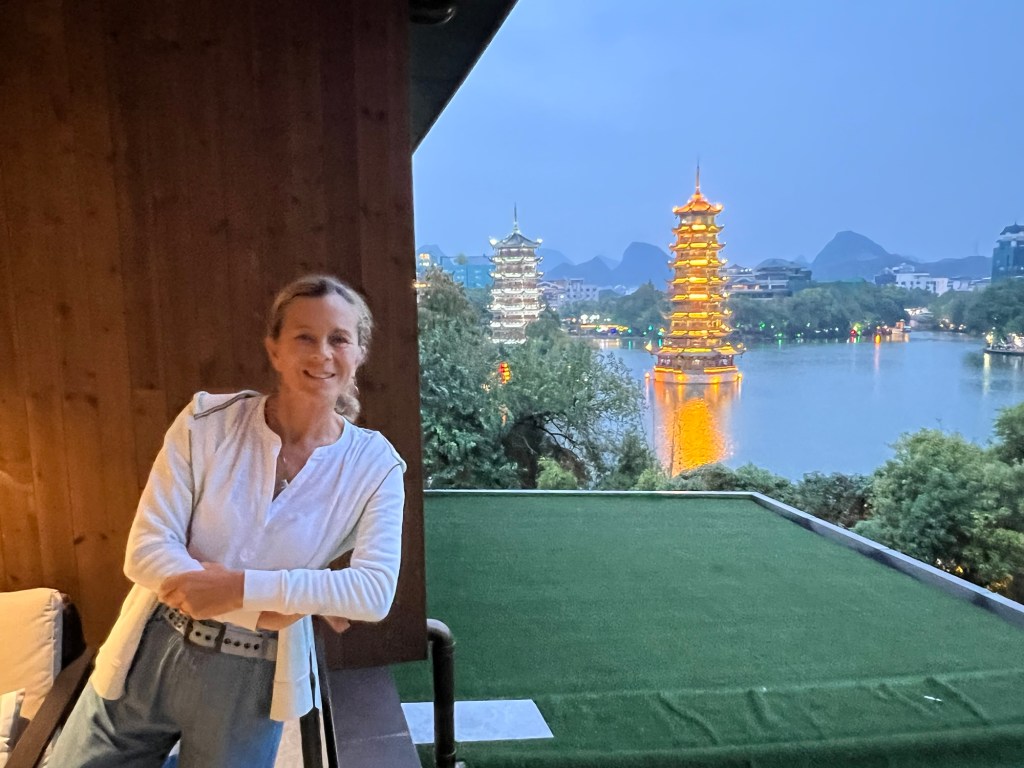
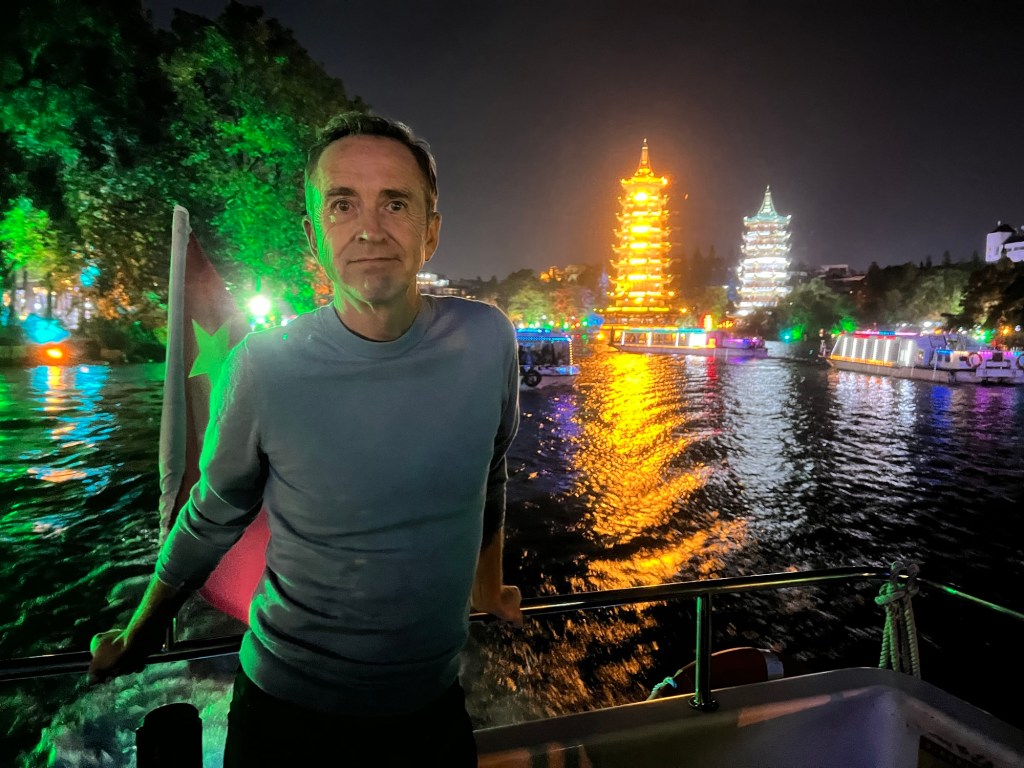
Guilin is the City of two rivers and four lakes and we have treated ourselves to a room with a view, it looks out onto the lake with the famous moon and sun pagodas. These beautiful buildings were originally from the Tang period 500 CE but were reconstructed only 25 years ago. They are very attractive, especially at night when they are lit in their corresponding colours of silver-blue and golden-orange.
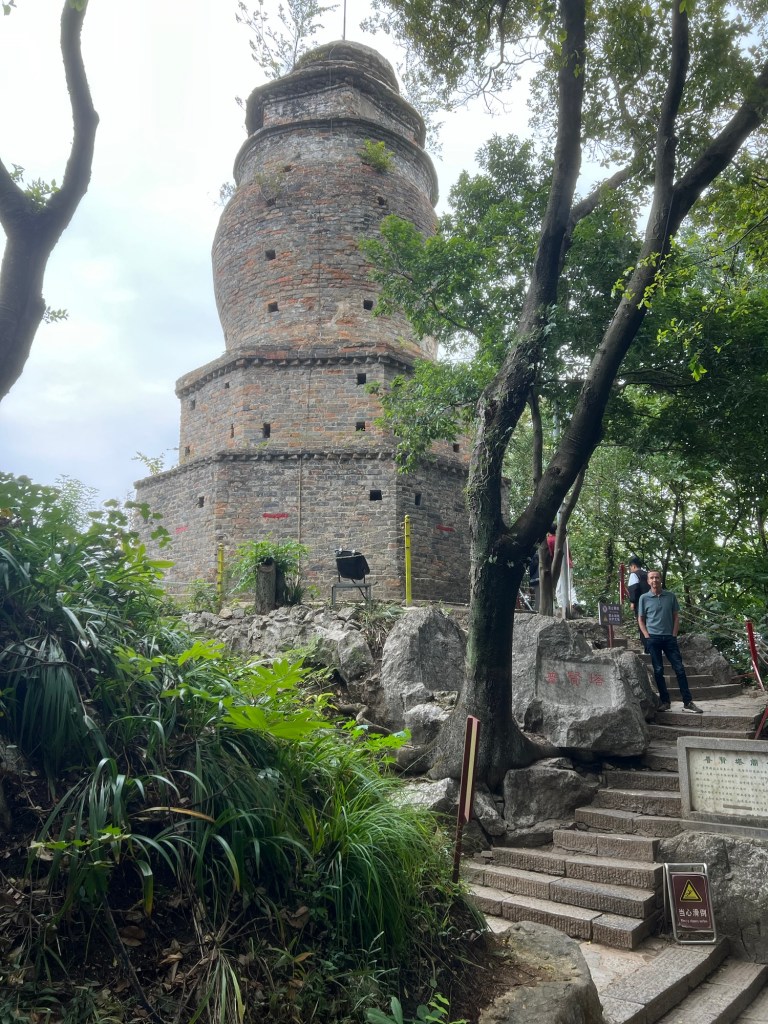
We explore straight away, and head to Elephant Rock Park; this rocky crag is shaped like an elephant dipping its trunk into the Li River and we join the crowds to climb up to the top where there is a giant ‘pot-bellied’ tower said to be the elephant’s ‘cargo’. We chat with a very nice couple who live and work in Cork, Ireland they are both Brazilian and enjoying an Asian holiday. The views from the top are amazing, we can see both ways along the Li River and the karst mountains disappear into the distant mist. The river is deep and wide and we watch the tour boats trickle home for the evening alongside the tiny electric bamboo boats carrying tourists on shorter trips. Apart from the Brazilian couple, we are the only western faces. The resort is very busy with large tour groups following flags held by amplified guides loudly describing the sights.
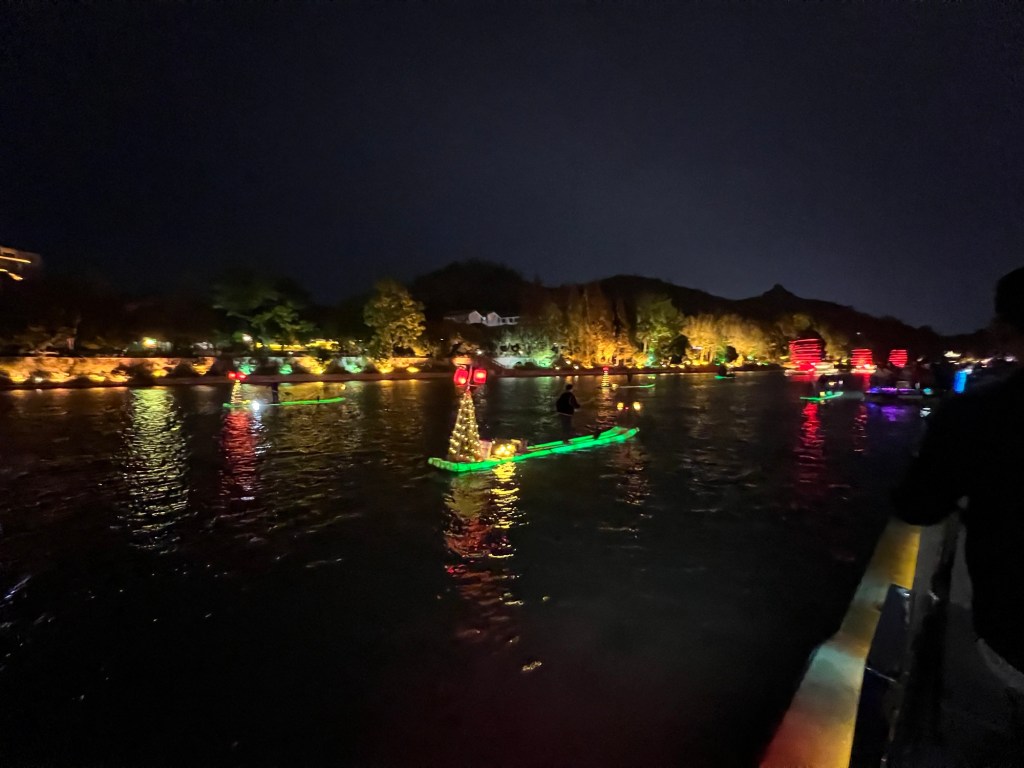
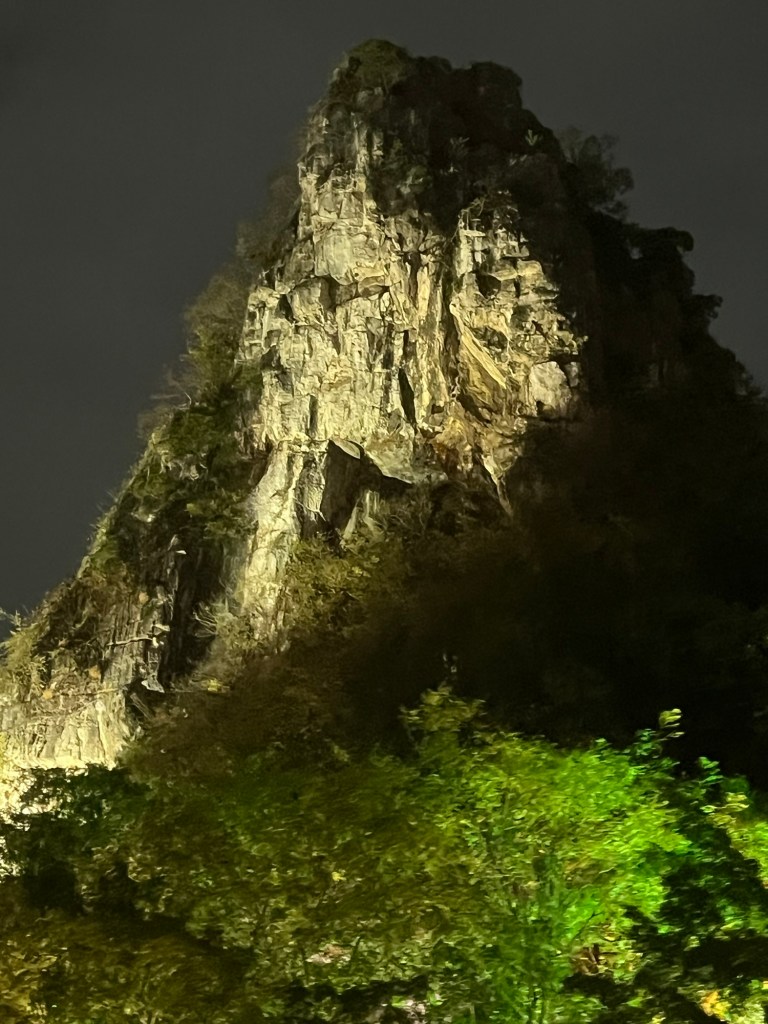
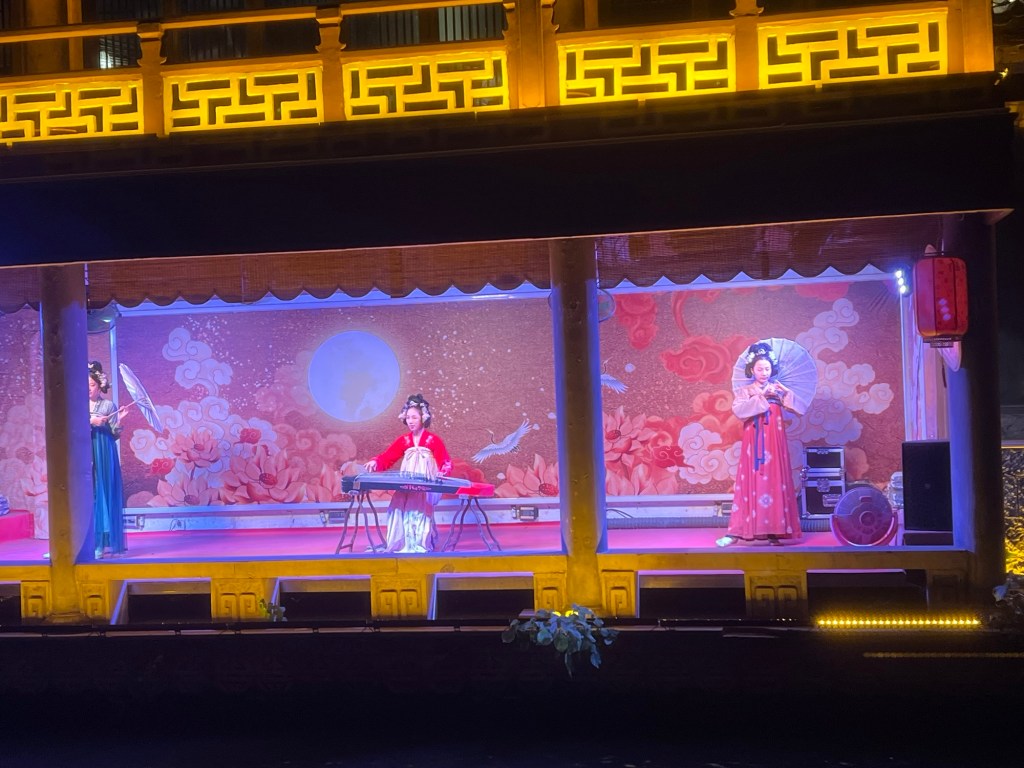
After a rest, we head out for a nighttime boat trip. We pile into one of 4 boats lined up at the pagoda lake, these are the same as the sight-seeing boats of Amsterdam holding about 40 people with an open deck at the back and large glass windows for great views. Almost immediately Rob and I head to the deck to take in this tour of two rivers and four lakes. The lights on the pagodas are magical. We are soon leaving this first lake under one of many bridges which are a variety of styes from classic Chinese pagoda-esq to swing and modern suspension. The underside of each bridge has decorative features created in the plaster and all are beautifully lit. Entering the Li River, we are on a stretch full of bamboo-style electric boats. We are amazed to find men and their fishing cormorants here; the fishermen swing the birds up and down on their oars and the birds stretch their wings and balance with poise. We had expected to encounter them further down the river on our travels to Yangshou. Hundreds of years ago the indigenous people started training cormorants to fish for them, the birds are sent into the river after fish, a rope is tied loosely onto their necks to stop them swallowing their catch until the Fishers have filled their quota and then the birds are released and fed. It is not humane as the birds are tethered, and certainly the practice is unnecessary today, kept up only for the tourists. The birds are magnificent, the fishermen do have a good relationship with their animals, and we did witness a fisherman pushing a huge fish up out of his bird’s throat which was quite astounding; but it really should be outlawed. We are on our second or third lake passing platforms that jut out from the shore, on each are a variety of performers. Women dancing in full traditional make up and costume, musicians playing traditional instruments, a mountain looking just like a monstrous face is a backdrop, it feels very appropriate as it is Halloween today. We pause briefly to watch a video projected onto what looks like an ancient wall, and then we head down the Taohua river back to the pagoda lake. On our way out we go through two unusual locks: in the first, the water level drops and we go through a tunnel to the other side, and in the second the whole boat is encased in a ‘basket’ to drop back to the level of our original river, these are very exciting and we join some German visitors in peering at the mechanics of these.
We are up early the next day to meet Eric our guide and Mr Li’an our driver from ‘Wendy Wei’ tours. They are both lovely and the car is very comfortable. Our location today is an 80-minute drive away. This is the first time that we have seen uninterrupted stretches of Chinese countryside, and it is reminding us of our travels in India, subtropical landscape, good roads, apart from, sorry India, there is absolutely no litter here.
Then we are heading into the mountains, these are not the straight up and down multiple karst mountains, we are travelling higher and higher along increasingly more winding roads. This is the Longji mountain range, named as its peaks resemble the backbone of a dragon and we are heading to the Longsheng rice terraces – the ‘dragon’s victory’. These terraces were created and worked 650 years ago. There are two differing ethnic minority communities living in this region, the Jinuo or Drum as they are famous for playing drums in their society traditions, and the Yao also known as the long-haired people, as the women leave their hair uncut and twist it into a very beautiful and distinct style. Both groups are officially recognised and protected by the Chinese Government.
We are nearly 3,000 feet above sea level. Mr Li’an waves us goodbye, he will meet us at a village further down the mountain, we are hiking up to the terraces and over the mountains to visit three villages where we will have a traditional lunch at a homestay.
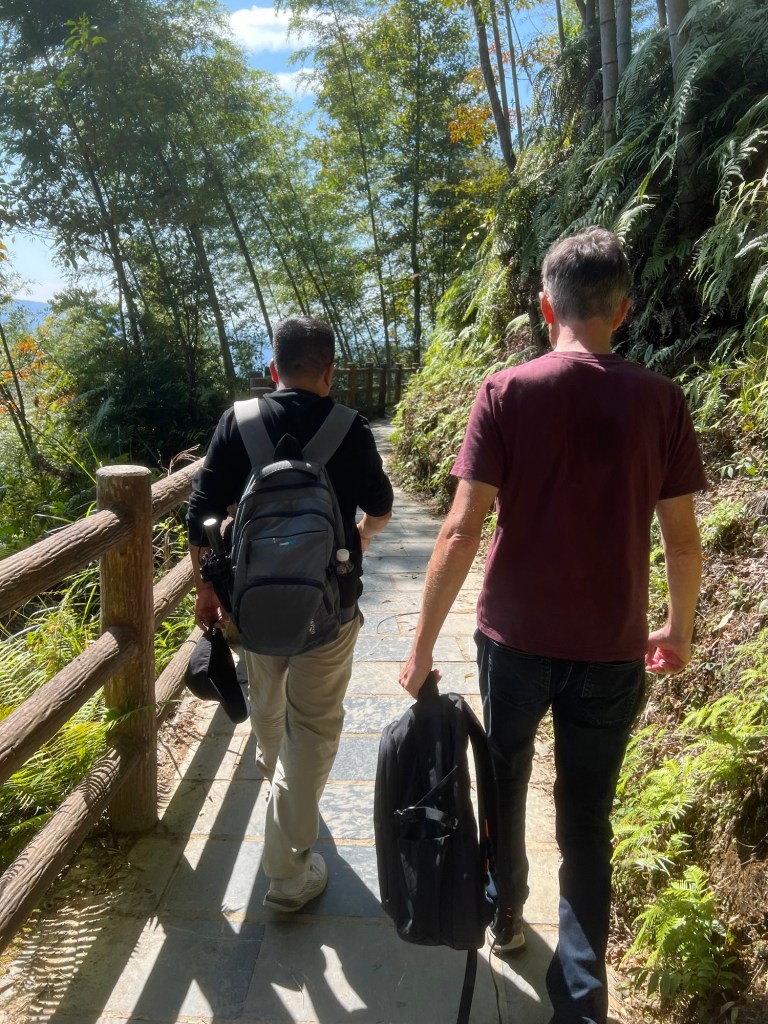
It is a perfect day. The sun is shining, the air is clear and the views spectacular. It is a ‘climb every mountain’ type of terrain. We are all hot and sweaty as we head upwards and we notice that Eric is finding lots of excuses to pause in the shade; we begin a joke that ‘Rob is very hungry and in a hurry to get to the village for lunch’ as we realise that we are a lot fitter than Eric and we will have to slow down for him.
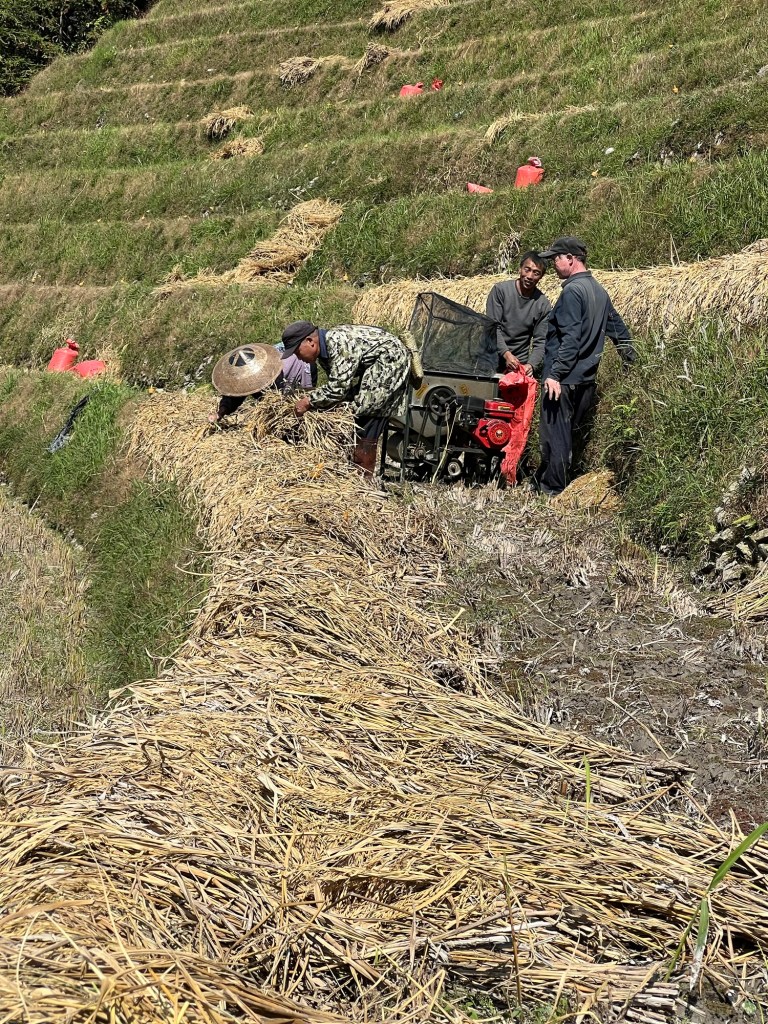
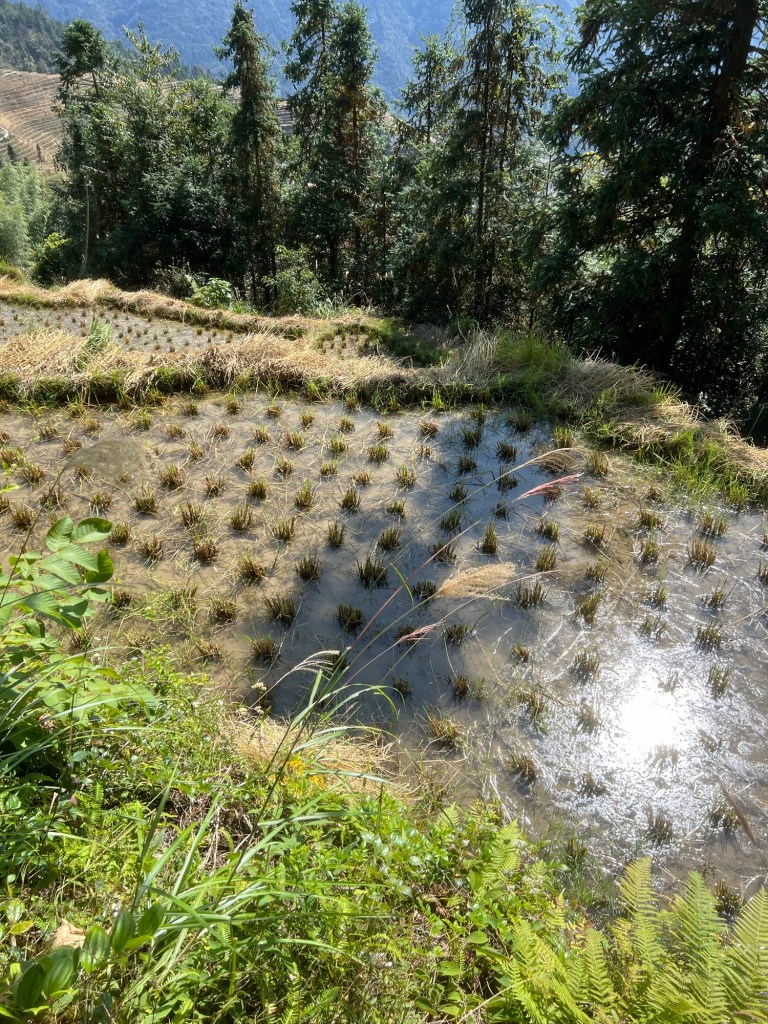
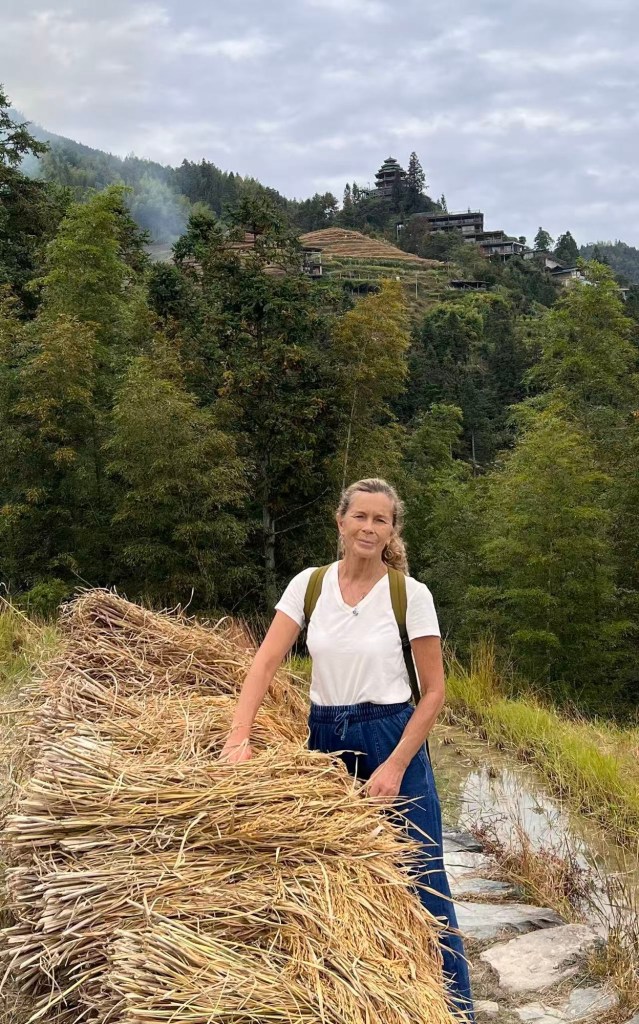
Although we have seen rice fields on our journeys in India, we have never been this close to the growing rice plants, and we are so lucky to have arrived at harvest time. Villagers from the Drum community are working here in small family groups, physically threshing the scythed rice on to the sides of large receptacles and stacking stalks to be used for animal bedding or crafts. Some families have small threshing machines that speed up the job and make life easer for the workers, but Eric explains that these are incredibly heavy and difficult to manouever up the steep, long terraces. Once threshed, rice is then collected in sacks and left to be carried down to the village to be dried. These rice sacks are incredibly heavy, the rice is still damp, and the pathways down to the villages are narrow and precipitous. A giant drone has been buzzing over our heads; Eric tells us that some of the communities cooperate to buy these, the rice bags are then transported by drone down the steep terraces to the drying areas. Modern tech meets tradition. This rice will be sold at a premium Eric tells us, these terraces are famous and the rice they produce is world class.
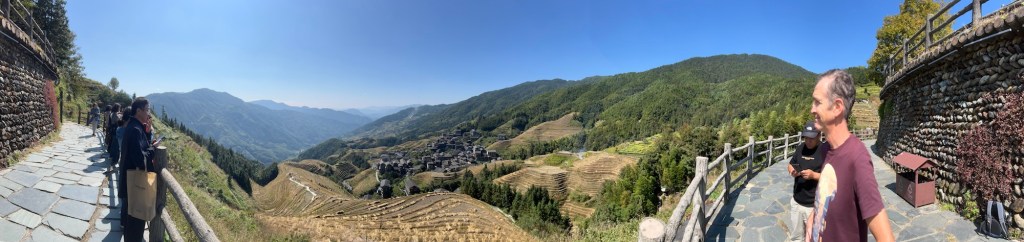
At the top we reach a viewing platform and can finally see the shape of the stunning and famous terraces below us, they are world renowned, and we remember a ‘Race around the World’ episode where two young women travel out of their way to see the terraces but find it is too cloudy! We are above Ping’an village looking at ‘Nine dragons and five tigers’ rice terraces; use your imagination Eric explains, look at the sections near the mountain, these are the claws of the dragon and there is its snout! We are so blessed to be looking at this view on this beautiful sunny day, it is absolutely stunning, although I can’t quite add up all the dragons and tigers. I climb further up the viewing platform, leaving Eric and Rob taking more photos and chatting. The views from up here down onto the terraces and also across the mountain range are excellent.
Just time for a quick water stop and then Eric is leading off to the next village. The next section of our hike is much more level, not so much of a climb he assures us, and himself. We really like Eric, he has a great sense of humour and is extremely patient as we request photo stops and he is really interested when we tell him all about our daughter Lydia who is a tour guide too.
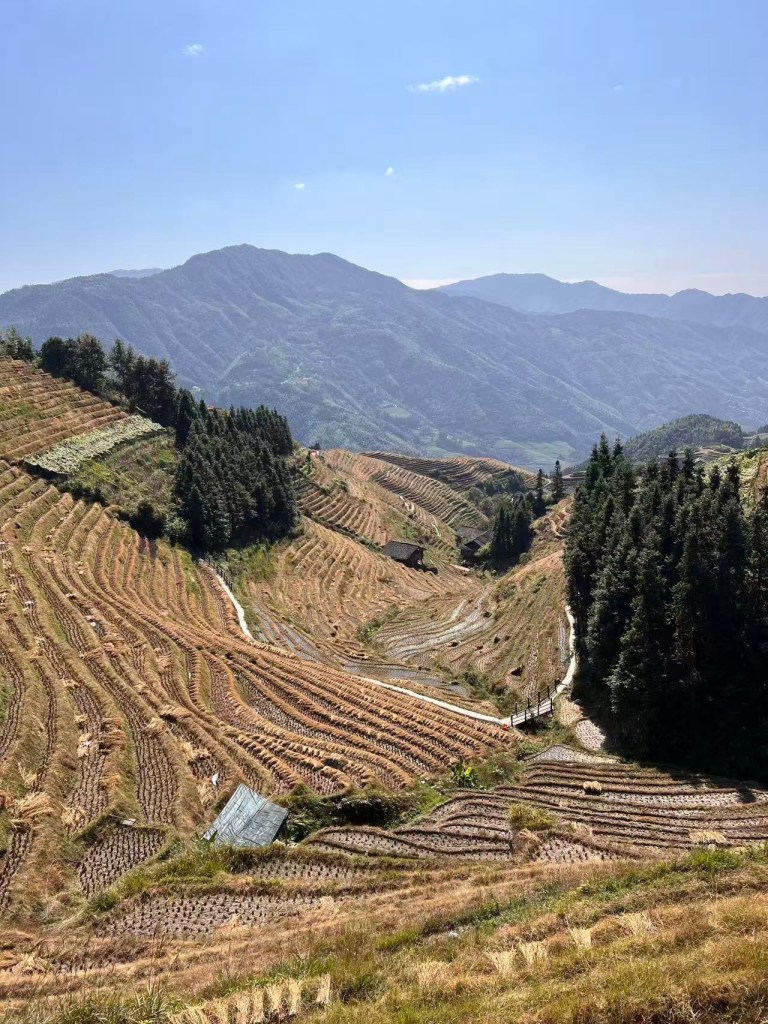
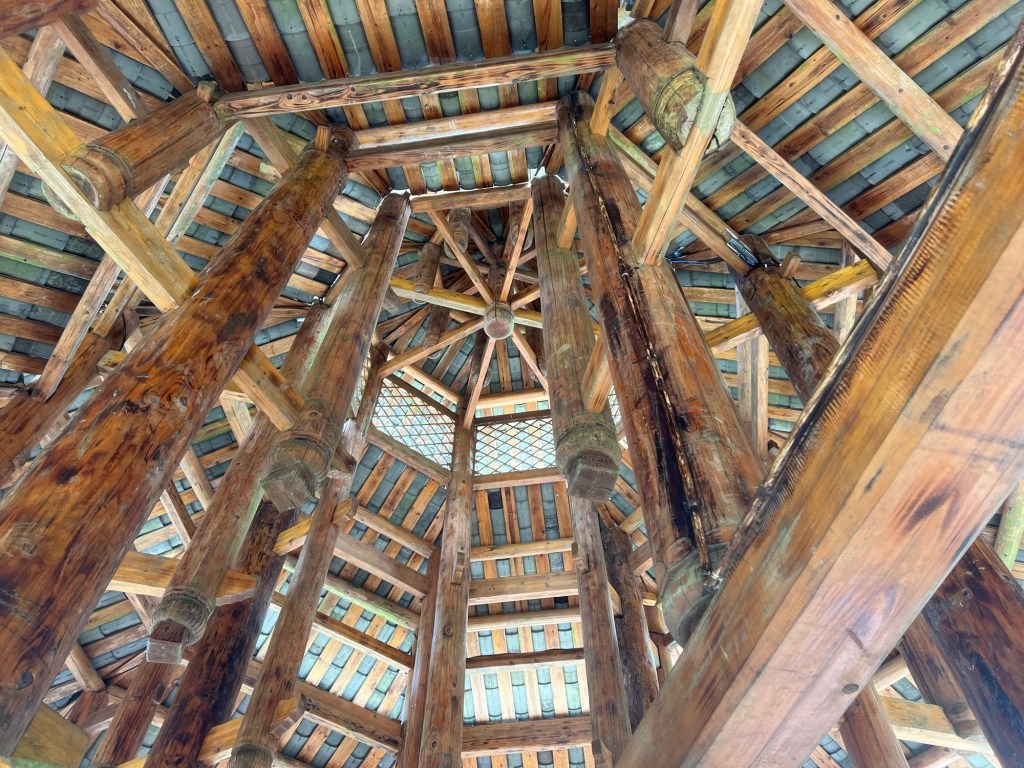
At the next village there is a drum pavilion, a giant multi-level structure, all wood and no nails used Eric clarifies proudly. Several families are using the shade to eat their lunch and we bump into other tours that we have been ‘leap-frogging’ along the way, although the trail is not at all crowded. At the top Eric shows us the second remarkable rice terrace. This one is called ‘Seven stars around the Moon’ – he shows us all seven stars and this time I can spot the moon. Eric apologises as we are late for lunch, we point out that this is our fault for dawdling not his. We have to walk another hour to the last village, Longji where the family are preparing the specialty bamboo rice for us.
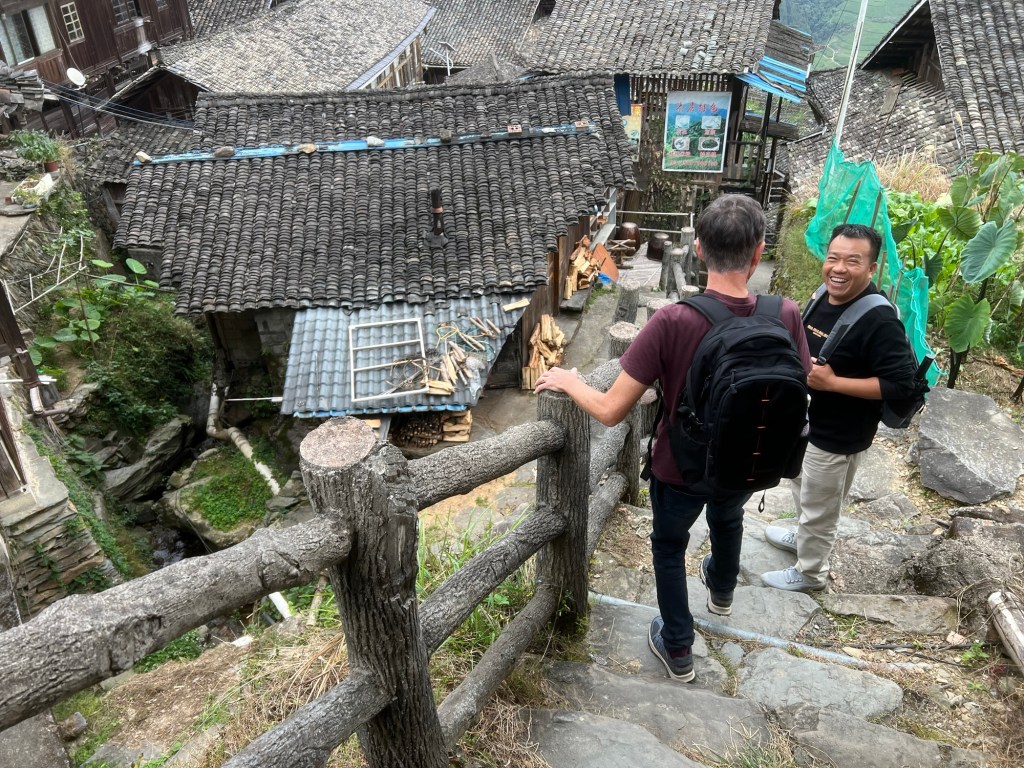
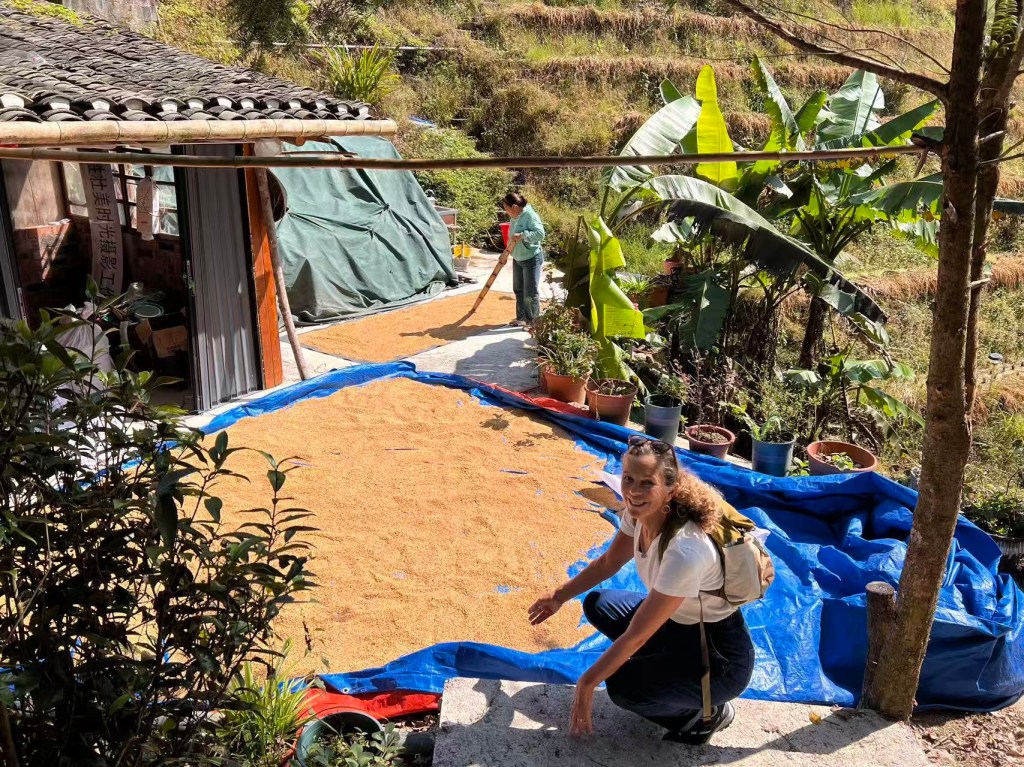
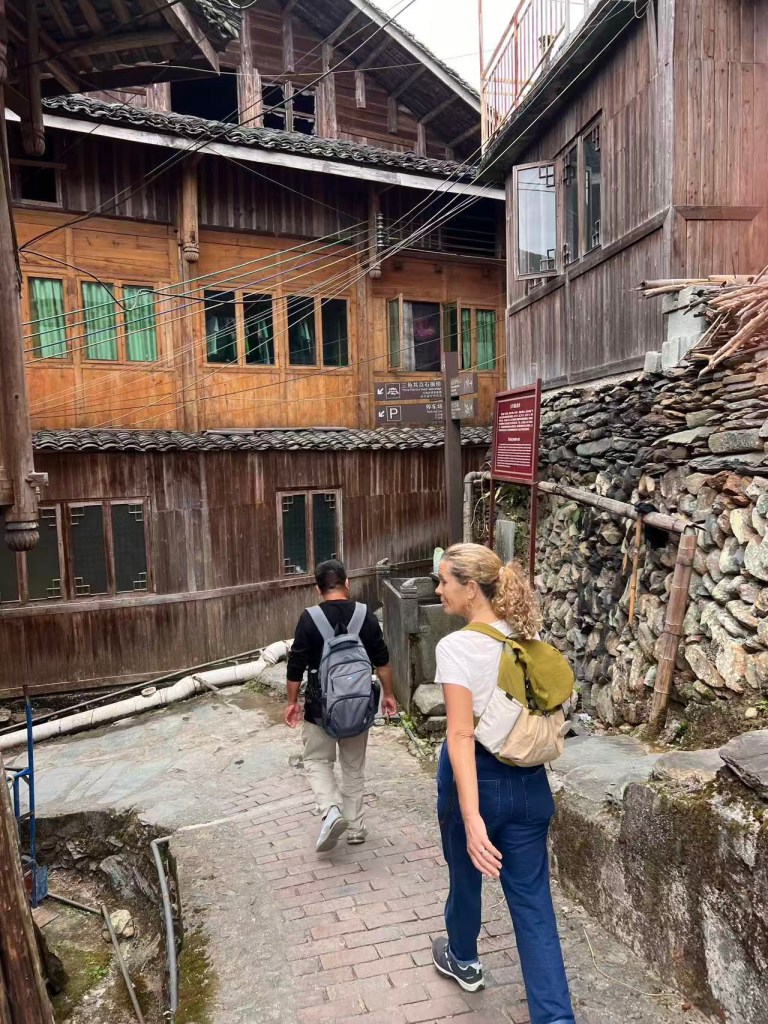
Now we are walking downhill along paths through forest threaded with pine, larch and bamboo trees. The green stems are this year, brown stems older, says Eric. Past waterfalls, over streams, alongside unharvested paddy fields and small mountain cabins, we are pleasantly shaded most of the way. Finally, we enter the last village. It is beautiful, wooden lodges built on the hillside. Flat terraces are filled with rice drying in the sun. Wood log piles seasoning wood for the winter months. The snows are fierce up here, declares Eric. It is spotless and could be a film set. It seems untouched by any modern conveniences, although it does have electricity, phones and water supplies. Eric draws our attention to the houses. Three levels, ground floor for animals, second for the family and top floor storage. We are welcomed at the next house by Mrs Hou- we have already passed Mr Hou, he is barbequing our bamboo rice over an open fire. Up the stairs we enter the huge living area, like many Chinese Grandmothers Mrs Hou is entertaining her Grandson whilst his mother is working. He is watching cartoons and unimpressed by visitors. We wash hands in the bathroom area, which has a walk in shower and top loader washing machine. Then we sit at a low table which is already set with a large pot.
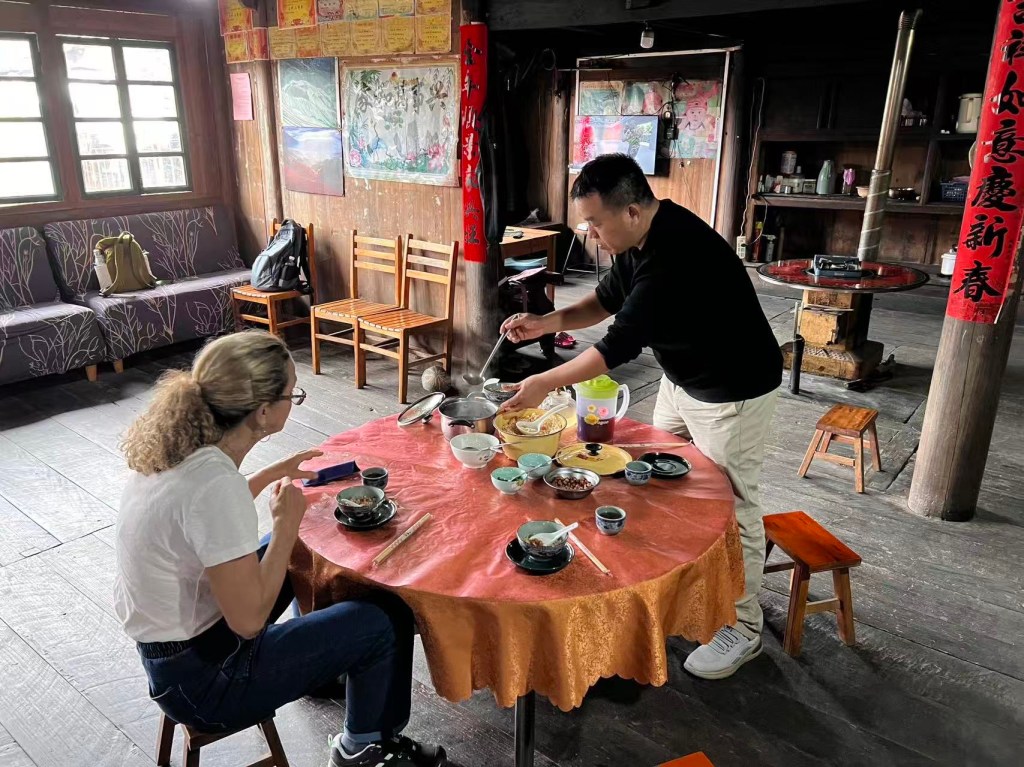
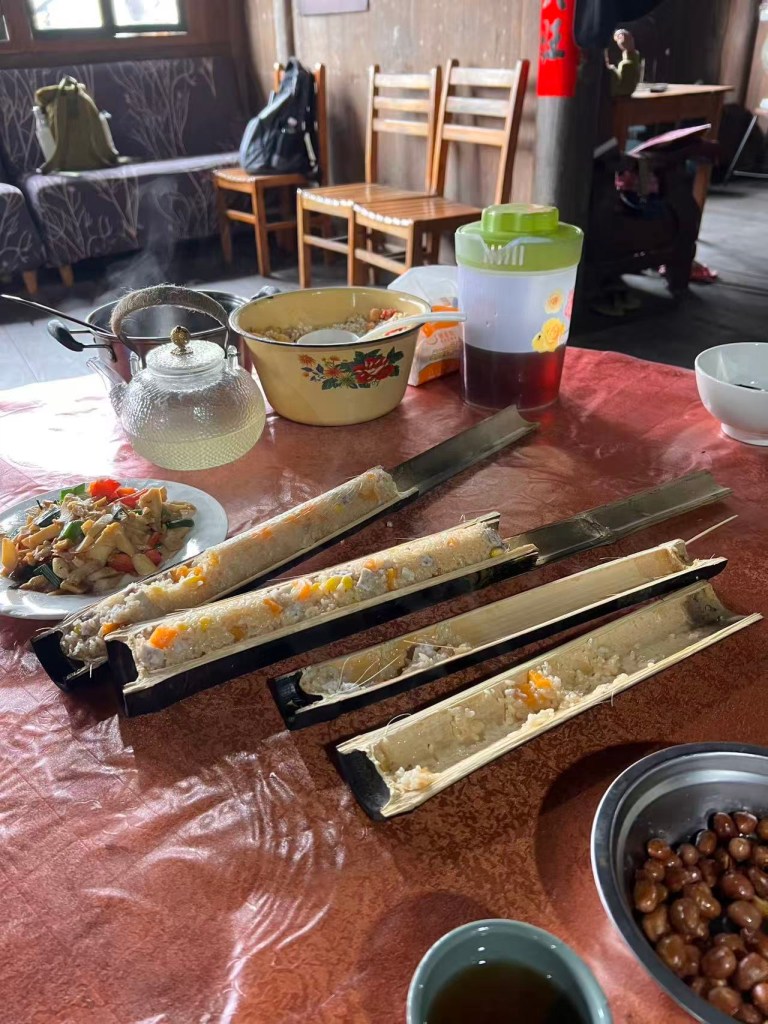
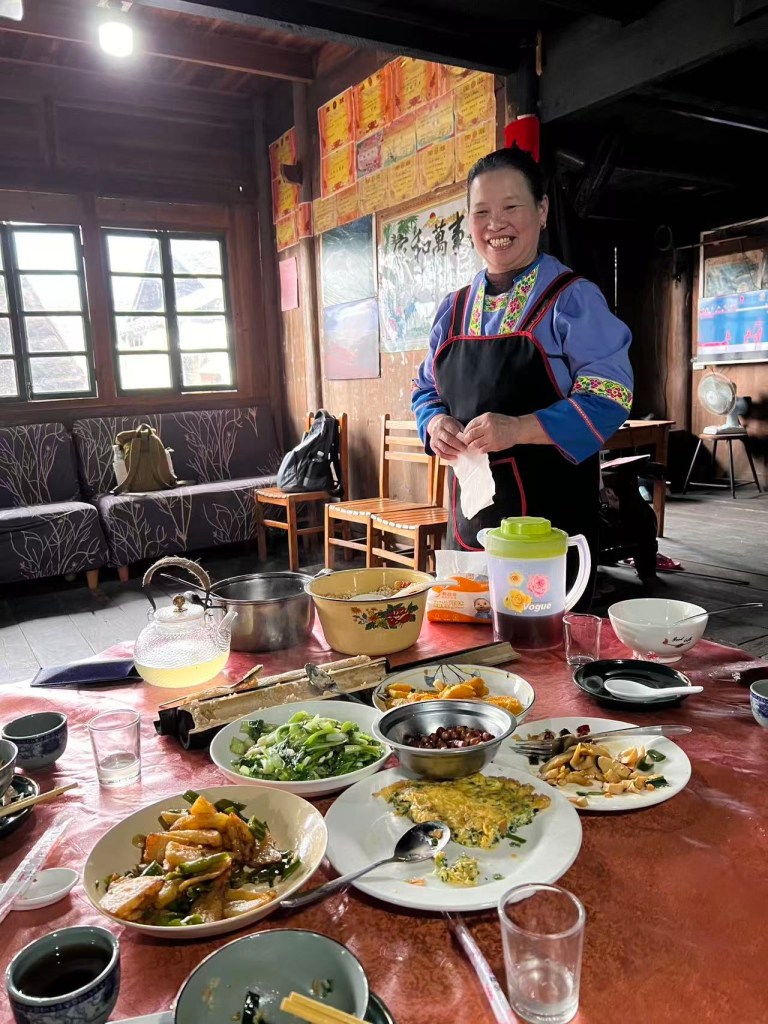
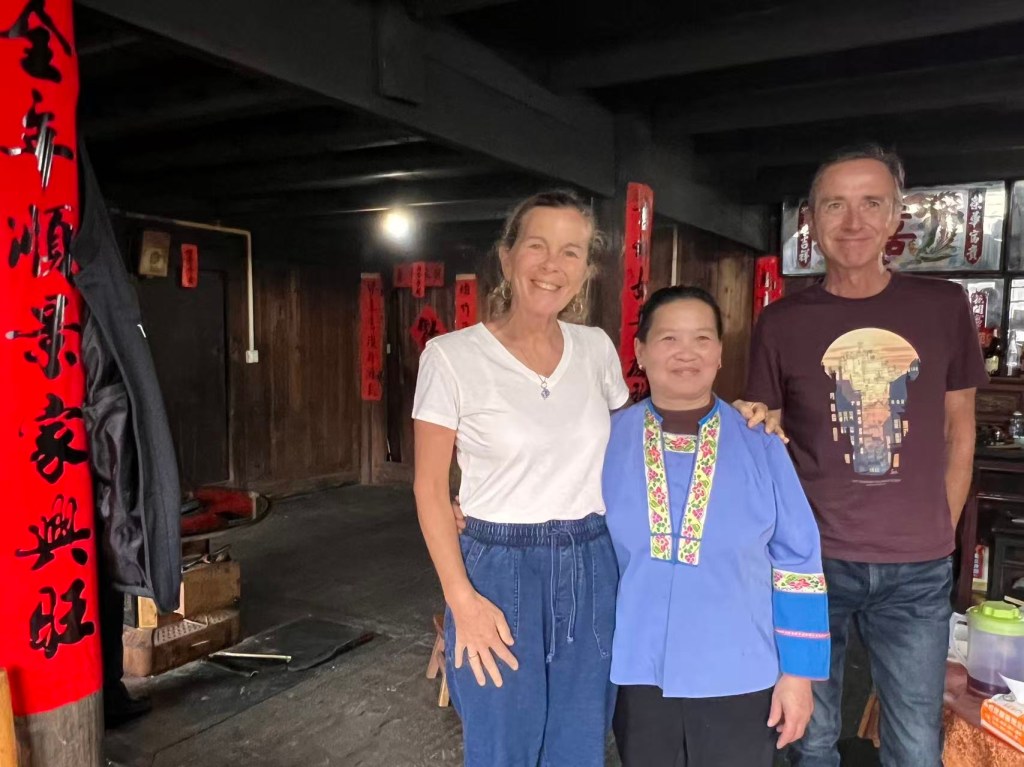
First you have oil tea, says Eric, it is a traditional start to the meal. Into the bowl goes a spoon of, I want to say rice crispies, Rob thinks that they are more like nuts – so somewhere in between. Garlic oil is poured over and peanuts and green herbs sprinkled on top, it is delicious but not the ‘drink’ of tea that we were expecting. Thinking that the main will just be a small bowl of bamboo rice, Rob and I agree to a second bowl of oil tea. How wrong we are, out from the kitchen comes Mrs Hou. Next, there are bamboo shoots with chilli and vegetables, they are even more tasty. Just as we are digging into these delights, out comes Mrs Hou with a bowl of squash and some roasted potatoes. In the meantime, Eric pours some rice wine. Mrs Hou makes this herself, it is very good. We agree, it is very good, any chance of a refill, thank you. There is also a purple tea made from monk fruit, plum in taste it is really refreshing. Mrs Hou comes out again, another dish is presented, omelette with spring greens, I made this especially as you are vegetarian, we have to eat it then! Now Mr Hou enters. He carries a scorched wide-diameter piece of bamboo sealed both ends. Mrs Hou gets a large knife, she gently hits the bamboo end on and it splits perfectly in half. She lays the two lengths gently down revealing perfectly cooked rice and vegetables in the centre of the stem, this is a traditional dish, the village speciality. It is an absolute feast which we truly had not been expecting, our stomachs are groaning but we don’t want to offend. It is the best food we have tasted since we came to China without doubt, we let Mr and Mrs Hou know this. At the end of the meal Eric speaks to Mrs Hou, now for something sweet to finish, we protest we can’t eat another morsel. Mrs Hou has already expertly cut the top from a yellow passion fruit and hands us one over with a tiny spoon, they are sweet and aromatic, nothing like the purple ones imported to the UK. These are from their own trees Eric tells us, she bags up another 10 and insists that we take them. Eric buys fresh chillis and Monk fruit from her, after much thanks and some photos, we high-five her young grandson and say: ‘Zaijian… Xiexie!’ … ‘Goodbye… thank you!’
We meet an American family on our way out who tell us they are hiking in the mountains and stopping at these little rural guesthouses, we are so taken by the peace of the village and the beauty of the place that we vow to return and stay someday.
Back at the foot of the mountain we meet Mr Li’An, he has had a good lunch, a rest in the car and is in good spirits, on our ride home he and Eric chat all the way. Rob and I silently reflect on where we have just been, the mountains, the rice terraces and the peaceful village life.







Seven Stars around the Moon


 Zhuhai Adventures
Leave a comment